

Rent or buy? Run your numbers.
Owning builds equity but costs more upfront and to maintain. Renting keeps cash free to invest. This tool compares your net worth either way after the number of years you choose, using assumptions you control.
Rough numbers only. This is a calculator for planning, not an approval or advice. Rates shown are examples you can change. Nothing you type is saved unless you choose to email it to yourself.
| Buy | Rent | |
|---|---|---|
| Monthly cost, year 1 | ||
| Upfront cash | ||
| Net worth at the end |
- Buying pulls ahead in
- Home value at the end
- Mortgage left at the end
Rough numbers for planning only. This isn't an approval, a quote, an offer or advice. Example rates are for the math and aren't rates we're offering. Your lender's policies, your credit and the property change the real answer.
Three steps.
Describe the home
Price, down payment, an example rate and the real ownership costs: tax, condo fees, insurance and maintenance.
Describe the rental
What you'd pay in rent for a similar place, and how fast rent might rise.
Set your assumptions
How fast the home might gain value and what your investments might earn. Try a cautious and an optimistic version.
Worth knowing.
How it's compared
The renter invests the down payment and closing costs on day one, plus any month where renting is cheaper. The owner invests the difference in any month where owning is cheaper. After your chosen number of years, it compares the owner's home equity after selling costs against the renter's investments.
What moves the answer
Home price growth, investment returns, how long you stay and selling costs swing the result more than the interest rate does. Short stays usually favour renting because buying and selling costs don't have time to pay off.
What it leaves out
Taxes on investment growth, rent control, renovations and life changes. Treat the result as a direction, not a verdict.
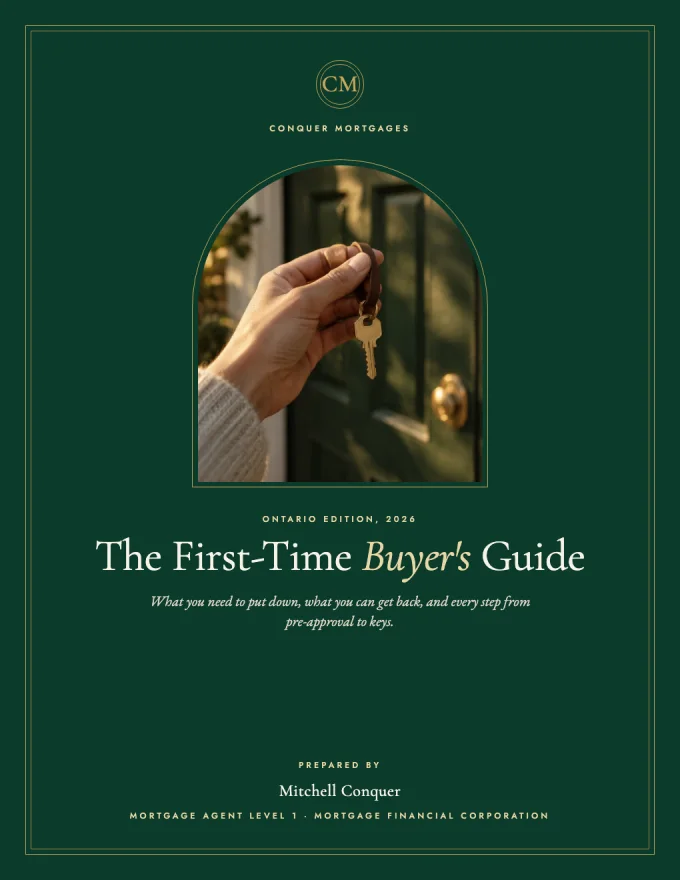
The First-Time Buyer's Guide
Down payments, the stress test, FHSA, rebates and closing costs, explained for Ontario buyers.
Get the free guideGood questions.
Is it better to rent or buy in Ontario?
It depends on how long you'll stay, what similar homes rent for, and what you assume about home prices and investment returns. Over longer stays, buying often pulls ahead because you're paying down principal. Over short stays, buying and selling costs can tip it to renting.
What maintenance cost should I use?
Use your own estimate for the home you're looking at. Older homes and houses usually need more than newer condos, where condo fees cover some of it. Running the tool at a couple of different levels shows how much it matters.
Why does the renter invest the down payment?
To make it a fair comparison. The money you'd put into a home could earn a return somewhere else. Without that, renting would always look worse than it is.
Does this include the land transfer tax?
Yes. Ontario land transfer tax, Toronto's tax if you choose it, the first-time buyer refunds and the PST on mortgage insurance are included in the upfront cost of buying.
Want the real number?
These are rough numbers. I can run your actual file against real lender criteria, and checking your options won't touch your credit.
Keep running the numbers
First-time buyer savings
Stack your FHSA, Home Buyers' Plan, savings and refunds to see your real down payment.
Open the tool Ontario closing cost estimatorClosing costs
Land transfer tax, rebates, legal, title insurance and the other costs you pay on closing day.
Open the tool Mortgage readiness scoreReadiness score
Eight quick questions. Get a readiness score and the three things to do next.
Open the tool